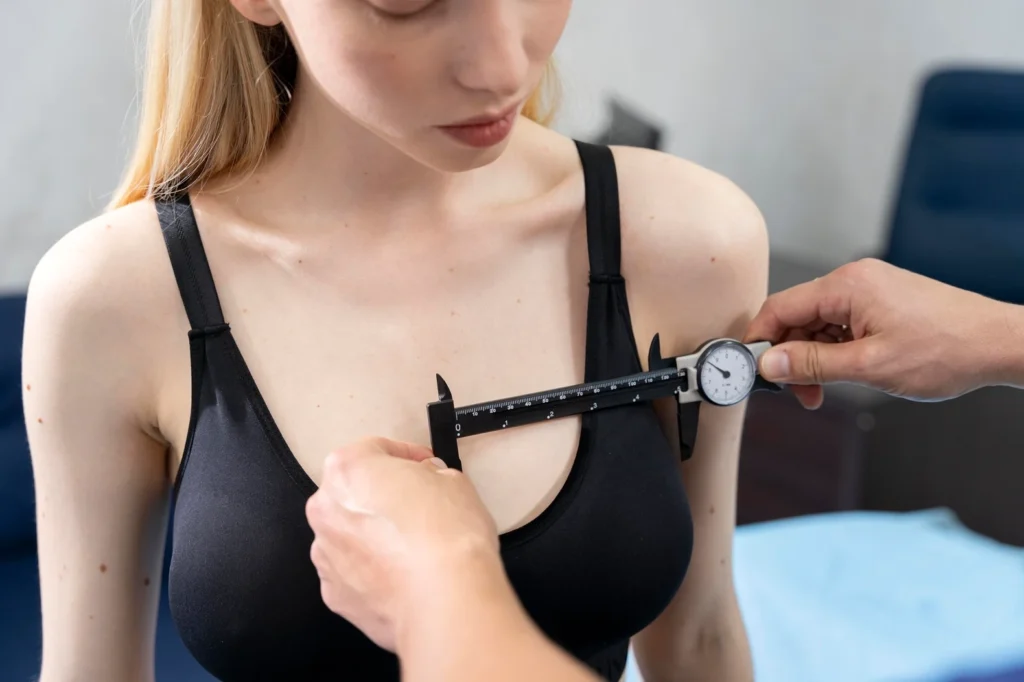
Selecting the appropriate breast implant relies heavily on an individual’s body type and proportions. A particular size or shape that appears harmonious on one person may not necessarily complement another with a distinctly different physique or chest width. The ideal implant should naturally integrate with the individual’s proportions to achieve results that look aesthetically pleasing, natural, and comfortable.
Various characteristics, including chest width, shoulder structure, and the volume of existing breast tissue, influence the appearance of an implant. For instance, those with a smaller frame might find a smaller implant with moderate projection beneficial, while individuals with a broader build may require more volume to achieve symmetry. The goal for surgeons is to select an implant that aligns with the patient’s body, ensuring the final outcome doesn’t appear overly pronounced or too understated.
Grasping the concept of body proportion plays a crucial role in crafting an augmentation strategy. It serves as the principle basis for deciding on size, shape, and profile that resonate with both anatomy and lifestyle. This customized method fosters greater confidence and satisfaction with the postoperative results.
The Effect of Body Type and Proportions on Implant Selection
Factors such as body type, frame width, and the existing breast tissue’s thickness all play a significant role in how breast implants ultimately appear and feel after surgery. Establishing a thoughtful match between an individual’s anatomy and the chosen implant profile facilitates achieving naturally balanced proportions tailored to their unique shape and lifestyle.
Determining Implant Choices Based on Body Frame
A person’s body frame is often a guiding factor in decisions regarding implant width and projection. Those with a narrower chest may benefit from high-profile implants that offer projection without increasing width unnecessarily. Conversely, a wider frame typically aligns better with moderate or low-profile implants that help sustain proportion and create a softer silhouette. Understanding these dynamics prevents implants from looking disproportionately small or overly broad.
During a bre
ast augmentation consultation in Toronto, the surgeon assesses the patient’s chest width, base diameter, and shoulder alignment to inform decisions on implant profile and size. These assessments are essential for customizing results to fit the body’s specifications.
For athletic individuals, opting for implants with reduced projection may help in maintaining upper-body harmony, while those with smaller torsos might enhance their silhouette with slightly higher projection. It is essential to achieve a balance between the width of the chest and the profile of the implant rather than focusing solely on the volume of the implant itself.
How Body Proportions Contribute to Natural Results
The dimensions of the torso, shoulder width, and hip size can significantly impact how implants blend into the overall figure. For example, implants that coincide with the body’s natural vertical and horizontal alignments appear more authentic, helping to avoid a disproportionate, top-heavy look.
A surgeon’s evaluation will include breast width and rib structure to maintain a coherent profile. Proportionate implant sizing additionally supports comfortable posture and reduces strain on the shoulders and back.
Achieving natural-looking results hinges on proportionate relationships rather than sheer size. Aligning the implant width with the breast base and synchronizing it with the patient’s physique enhances symmetry in the overall appearance. This method ensures a flattering fit for clothing as well as a pleasing aesthetic.
Evaluating Skin Elasticity and Breast Tissue
The elasticity of the skin and the volume of existing breast tissue play critical roles in determining how implants position on the chest and how well they integrate with surrounding tissues. Skin that is firm and elastic offers greater support, which aids the implant in maintaining a smooth contour.
For individuals with less tissue, it may be necessary to place implants beneath the muscle to minimize the visibility of edges or rippling. Softer tissue offers a smooth slope, enhancing the natural profile post-surgery.
A thorough examination of tissue thickness, firmness, and skin characteristics allows the surgeon to recommend an ideal implant type that aligns with the patient’s natural features. This comprehensive evaluation also helps to determine the appropriate depth for implant placement, ensuring durable and stable outcomes.
Personalizing Implant Choices for Each Individual
The ideal breast implant for each person is influenced by their unique anatomy, tissue quality, and expectations. The most effective breast augmentation results come from a meticulously tailored approach that harmonizes implant type, size, shape, and profile with body proportions and desired aesthetics.
Examining Different Implant Materials: Silicone, Saline, and Gummy Bear
The materials used in implants vary in terms of texture, appearance, and maintenance needs. Silicone implants contain a cohesive gel that mimics the feel of natural breast tissue, making them a popular choice due to their realistic texture. Nonetheless, it is crucial to monitor their integrity over time via imaging, as ruptures may not be immediately apparent.
Saline implants are filled with sterile saltwater encased in a silicone shell. Surgeons can adjust their volume during the procedure to achieve better symmetry, although they tend to feel firmer than silicone and may reveal ripples in individuals with less tissue. If a saline implant ruptures, it deflates quickly, making it easier to identify.
Gummy bear implants, filled with a thicker silicone gel, maintain their shape better than other options. They offer a stable contour and typically maintain projection over time. While they require slightly larger incisions, they are favored by many patients seeking a natural slope with long-lasting form stability.
Selecting the Optimal Implant Size and Profile
The choice of size and profile directly influences how breast aesthetics relate to the chest and shoulder widths. While implant size determines the volume, the profile influences the degree of projection. Surgeons commonly evaluate three primary profiles: low, moderate, and high.
Low-profile implants are ideal for wider chests, providing a soft, natural contour. Moderate-profile implants strike a balance between fullness and proportion, often selected for a subtle yet noticeable enhancement. High-profile implants are designed to project further out from the chest, thus offering a more pronounced volume without widening the overall appearance.
Final decisions are influenced by measurements such as chest width, existing breast tissue, and skin elasticity. Finding the right balance is essential to avoid unnatural stretching or asymmetry. Modifications should consistently align with personal goals and physical proportions for a natural and seamless result post-surgery.
The Role of Implant Shape in Final Appearance
Round implants are known for creating a fuller upper breast, a look that many associate with youthful allure. Their symmetrical design also means they will retain their shape even if they rotate after implantation.
Teardrop or anatomical implants emulate the natural breast slope, delivering a gradual increase in volume from top to bottom. They are particularly suitable for those desiring a gentle contour or who possess limited natural breast tissue.
The choice of shape should be dependent on the individual’s body frame and the desired silhouette. For instance, athletic or petite individuals might gravitate toward moderate projection for fluid movement, while round implants appeal to those seeking a uniform lift without harsh transition lines. Anatomical shapes offer a softer, more organic appearance.
The Importance of a Board-Certified Plastic Surgeon Consultation
A board-certified plastic surgeon is essential in guiding the selection of the appropriate implant and placement technique. Verification of a surgeon’s certification indicates that they adhere to the education, training, and safety protocols necessary for performing breast augmentation surgery.
Throughout the consultation process, surgeons evaluate anatomical features, tissue characteristics, and patient lifestyle to develop a tailored surgical plan. Discussion of potential risks—including capsular contracture, implant rupture, and asymmetry—is crucial. Transparent dialogue about the expected size and shape ensures that patient goals align with practical outcomes.
An experienced surgeon utilizes precise measurements and surgical skill to customize implants according to the patient’s unique anatomy. This personalized approach promotes natural proportions, long-term comfort, and results that remain consistent over time.
Final Thoughts
The optimal choice of breast implant is fundamentally shaped by body type and proportions. Each individual’s chest width, tissue density, and shoulder structure will determine the fit and appearance of the implant. The aim is to achieve a natural and balanced look, rather than something that feels forced or artificial.
Careful sizing of the implant is vital to ensure harmony with the waist, hips, and upper body. Excessive volume can disrupt balance, whereas insufficient volume may not fulfill personal expectations. Through meticulous planning, the outcome is more likely to appear natural.
Practical lifestyle considerations are also vital. An individual with an active or athletic lifestyle might opt for smaller implants for enhanced comfort and mobility, while others may favor more projection to attain their aesthetic goals.
Ultimately, the selection of implants varies based on anatomy, personal desires, and daily activities. By harmonizing these elements, patients can achieve results that resonate with their bodies and foster confidence in their enhancement choices.